

Dry needling is a technique our trained physiotherapists may include in a treatment plan for certain pain and movement problems. It involves placing a thin, sterile needle into selected muscles or related tissues following an assessment.
At Atlas Physiotherapy & Health in Markham, our team assesses symptoms, health history and treatment goals to determine whether dry needling may be appropriate as part of physiotherapy care.
Dry needling uses a thin, sterile, single-use filament needle that is carefully placed into selected muscles or related tissues based on your physiotherapy assessment.
No medication or other substance is injected through the needle, which is why the treatment is described as “dry” needling.
At Atlas Physio, dry needling is provided by appropriately trained physiotherapists and is used as one possible part of a broader physiotherapy treatment plan.
It doesn’t replace assessment, education, exercise or other rehabilitation strategies your physiotherapist may recommend.


Dry needling and acupuncture both involve the insertion of fine needles, but the reason for treatment, assessment process and clinical framework may differ.
At Atlas, we use dry needling within a physiotherapy assessment and rehabilitation plan.
Our physiotherapists select treatment areas based on symptoms, physical findings and treatment goals.
We consider dry needling as one possible part of a broader physiotherapy care plan.
Our physiotherapists may consider dry needling when muscle sensitivity, tightness or other musculoskeletal findings appear to be contributing to pain or restricted movement.
We determine the treatment area and clinical reason for using dry needling through an assessment rather than relying on a symptom checklist alone.
Research has examined dry needling for a range of musculoskeletal conditions, including its potential to reduce pain in some patients.
Our physiotherapists consider the available evidence alongside assessment findings, symptoms and treatment goals when deciding whether dry needling may be appropriate as part of a broader physiotherapy plan.


Our physiotherapists may consider dry needling when relevant muscle or musculoskeletal findings contribute to pain, reduced movement or difficulty progressing through rehabilitation.
Depending on the assessment, dry needling may be considered for:
Having one of these symptoms doesn’t automatically mean dry needling is appropriate.
Our team also considers the diagnosis, proposed treatment area, health history, treatment preferences, practitioner training and available alternatives before recommending care.
People can experience dry needling differently.
Treatment may involve a brief pinch as the needle enters the skin, followed by pressure, an ache or a short muscle-twitch sensation.
The sensation can vary depending on the treatment area, technique and individual response.
Our physiotherapists encourage patients to communicate any discomfort, anxiety, light-headedness or unusual sensations during treatment.
Temporary soreness, minor bleeding or bruising can occur after dry needling.
Other reactions are possible, including less common serious complications depending on the treatment area and technique.
Before proceeding, our team explains expected sensations, material risks, alternatives and relevant aftercare.


Dry needling isn’t appropriate for every person, symptom or area of the body.
Before recommending treatment, our physiotherapists review factors that can affect safety, including:
Our team also considers patient preferences and appropriate treatment alternatives.
Dry needling only proceeds following assessment and informed consent.
We provide physiotherapy services at 4961 Highway 7 East, Suite 201 in the Markham-Unionville area, serving patients from Markham, Unionville and nearby communities.
When pain or restricted movement is affecting everyday activities, our physiotherapists can assess the symptoms and determine whether dry needling may be an appropriate part of a physiotherapy treatment plan.
Assessment: Our physiotherapists review symptoms, health history, goals, and previous care, then complete an appropriate physical examination.
Recommendation: If dry needling may be suitable, we explain the proposed treatment area and technique, alternatives, expected sensations, potential risks, and costs before obtaining informed consent.
Treatment: Our trained physiotherapists use sterile, single-use needles in the selected treatment area. Dry needling may be combined with education, activity modification, mobility work, strengthening, manual therapy, or a home exercise program as part of a broader physiotherapy plan.
Reassessment: We review progress, tolerance, and response to treatment throughout care. The treatment plan may be continued, modified, or stopped depending on individual response and goals.

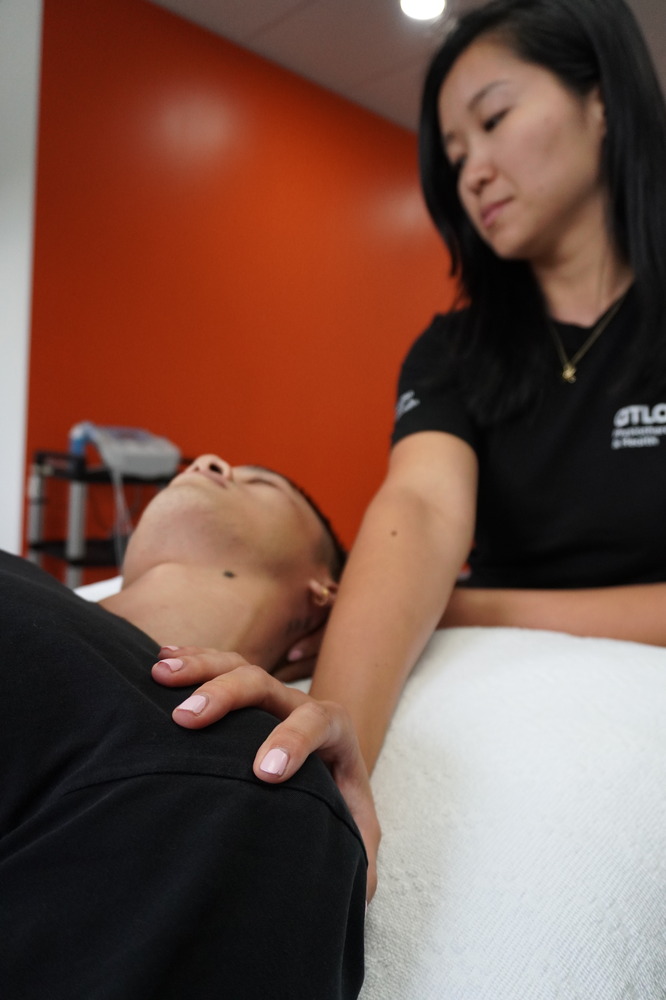
We use dry needling as one possible part of a broader physiotherapy plan rather than as a stand-alone treatment.
Depending on the assessment, symptoms, and treatment goals, our team may combine dry needling with rehabilitation strategies and other physiotherapy services offered at Atlas.
A treatment plan may include:
Our physiotherapists may also recommend temporary activity or load modification, review work or sport demands, and reassess progress throughout care.
We determine which combination of treatments is most appropriate based on assessment findings, response to care, and treatment goals.
Book your free 10-minute consultation online, visit us in person in Markham, or call 905-470-0950 to get started.
Clinically reviewed by Waku Goto, Physiotherapist
Why is it called dry needling?
Dry needling uses a solid filament needle and does not inject medication or another substance. That is why the technique is described as “dry” needling.
Does dry needling hurt?
Dry needling may involve a brief pinch, pressure, an ache, or a short muscle-twitch sensation. The experience varies depending on the person, treatment area, and technique. Our physiotherapists encourage patients to communicate any discomfort or unusual sensations during treatment.
What needles are used for dry needling?
Our trained physiotherapists use thin, sterile, single-use filament needles. No medication is injected through the needles.
How many dry needling sessions are needed?
There is no single treatment schedule that applies to everyone. The number and spacing of visits depend on the assessment, treatment goals, response to care, and overall physiotherapy plan.
Are there side effects or risks?
Temporary soreness, minor bleeding, or bruising may occur. Other reactions and less common serious complications are also possible depending on the treatment area and technique. Our physiotherapists review expected effects, potential risks, alternatives, and relevant aftercare before treatment.
Can dry needling replace exercise?
We generally consider dry needling one possible part of a broader physiotherapy plan. It is not intended to replace education, therapeutic exercise, activity modification, or progressive return to activity.
Is dry needling covered by insurance in Ontario?
Coverage depends on the individual extended-health plan and how treatment is delivered and billed within physiotherapy. We can provide the information needed to confirm coverage with an insurer, but we cannot guarantee reimbursement.
How do I book a dry needling appointment?
Patients can book a physiotherapy assessment through our secure online booking portal or call us at 905-470-0950. Our team will assess the concern and determine whether dry needling may be appropriate as part of a physiotherapy treatment plan.